
Everyone loves a fitness challenge. Whether it’s a 30-day squat streak, a 6-week transformation program, or the annual New Year fitness blitz, challenges are marketed as the shortcut to a better body and a refreshed lifestyle. But if you look deeper, you’ll find that lasting physical change doesn’t come from a fitness challenge — it comes from a mental transformation.
In other words:
You don’t change your body until you change your mindset.
Why ‘fitness challenge’ culture is flawed
The very term fitness challenge implies a fixed timeframe: 4 weeks, 6 weeks, 8 weeks — do this hard work for this long and then you’re set. But habits don’t work like that.
When someone signs up for a fitness challenge, the underlying promise is usually:
“Stick to this plan for a bit and you’ll see results.”
That’s enticing — and it can give you a kick start. But it also subtly teaches something dangerous: that success only requires a temporary effort. The challenge becomes a sprint, not a lifelong strategy. And when the deadline passes, most people simply go back to their old routines.
Most people don’t stick with the change
We can’t measure the typical success rate of fitness challenges directly — largely because “fitness challenge” is a broad term — but we do know a lot about the success rates of similar behaviour change efforts, like New Year’s resolutions. And these give us a strong indication of how people perform when trying to overhaul habits.
Research shows that about 80 % of people abandon their New Year’s resolutions by mid-February and many quit long before that. (YM-YWHA) Another review of multiple studies suggests that only between 6 % and 50 % of people successfully maintain long-term behaviour changes from resolutions. (comphc.org)
That’s a big range, but the bottom line is this: the majority fail.
Given that fitness goals often are resolutions — “lose weight,” “get fitter,” “work out five days a week” — a reasonable assumption is that most people who take on a fitness challenge will not sustain the changes afterwards.
And each time someone embarks on a challenge and fails to keep going, it leaves a psychological trace.
Failure influences future outcomes
You’ve probably heard the cliché: “The more you fail, the more likely you are to fail.” But there is psychological truth in it.
When someone repeatedly starts and stops fitness challenges — or cycles through New Year’s resolutions — they create a failure memory pattern. Every attempt that doesn’t stick reinforces the internal narrative that lasting change isn’t possible for me. That makes future attempts even harder.
That’s not because people lack willpower — it’s because temporary efforts don’t rewire your identity or your mental habits. They only reinforce the pattern of start hard → quit → feel guilty → try again later.
This is different from genuine behavioural change, which requires:
- Consistent, ongoing practice
- Identity shift (“I am someone who…”)
- Small, repeatable habits integrated into daily life
Fitness challenges often skip these fundamental elements. They focus on intensity and short bursts rather than sustainable change.
Challenges can work — as a jump-start, not a destination
Here’s the nuanced truth: a fitness challenge can be useful. It can:
- Provide initial motivation
- Create community accountability
- Introduce structure when you feel lost
- Help you learn what you’re capable of
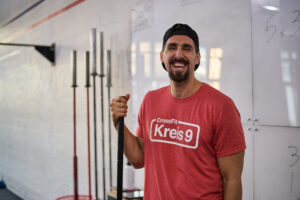
At CrossFit Kreis 9, for example, short-term events or community fitness pushes can energize members and create positive momentum. But even there, the real progress comes from consistency — not just the challenge itself.
A challenge is best viewed as a trigger or catalyst, not a framework for long-term change.
Real change means changing your mind first
What separates people who truly transform from those who don’t isn’t how many push-ups they did in week two of a challenge — it’s whether they internalized new patterns of thinking.
Here are some of the key differences between temporary challenge behaviour and lasting behaviour change:
Temporary: “I’ll do this for 30 days.”
Lasting change: “I am someone who does this regularly.”
Temporary: Motivation driven by deadlines and external prompts.
Lasting change: Motivation driven by identity and internal values.
Temporary: Short bursts of effort.
Lasting change: Systems and sustainable habits.
Transformational change requires a mental shift that precedes and sustains every physical outcome. Without that internal foundation, most temporary bursts of discipline fizzle out — and many people end up feeling like their attempts were failures.
So what should you do instead?
If you want the real truth about lasting fitness change, here’s a better approach than jumping from one fitness challenge to the next:
- Define your identity first.
Ask: “What kind of person am I trying to become?” Not “How fast can I see results?” - Set small, repeatable habits.
Sustainable effort beats intensity every time. - Build systems, not sprints.
It’s better to work out three times a week you can keep forever than six times a week you quit after two months. - Reframe setbacks as learning, not failure.
This mindset shift makes follow-through far more likely.
Conclusion
Fitness challenges are popular — and they can help start something. But they are flawed by design if you think they can replace deep mental change. A physical transformation only happens when you fundamentally change how you think about fitness, habits, and yourself.
Temporary challenges might motivate, but lasting change comes from consistent identity-based habits — not timeboxed bursts of effort.
To read: Here’s a credible research article about behaviour change and resolutions:
🔗 A large-scale experiment on New Year’s resolutions — this study shows how goal framing affects long-term success and explores behavioural change outcomes.
👉 https://www.ncbi.nlm.nih.gov/pmc/articles/PMC7725288/ (pmc.ncbi.nlm.nih.gov)